I'm Back!!! Time can fly right past us if we don't pay attention. Welcome to the third week of my blog post, and you may find some interesting things that you may or may not have known. We as people have a tendency to focus and hear things that we want to hear, and some may call it selective hearing. The focus of this piece will be on strategic communication listening skills to help improve communication that may have an effect on your decision-making process. We're living in a technological, social media society that people are adapting to, such as the laggards and we already know that the Millennium are always ahead. So the blog will focus on how we listen and the effects involving communication. When one can accept and understand what we've been missing, effective listening skills will guide you in the right direction. Lets begin.

To give some insight on how significant listening skills are, let us take a look at the pie chart above. Compared to reading, writing, and speaking, listening accounts for 72 percent of communication. Without the ability to listen, then the other subject can't exist. How can a person become an effective listener when engaging in a conversation with others or from the social media or in an organization? To become a better listener, one must take the time to become one. New information on becoming an effective leader came from Dr. Kline, who wrote a book called "Listen Effectively" and upon my reading, I was amazed on somethings that I didn't know. My mindset was that I have no problems with listening and boy was I wrong. During my research of knowledge in Leadership and media strategies class topic, we've discussed how communication strategies professionals can use listening skills to help communicate internal, external, and government environments. Each one of these environments represents the lack of listening skills of a person.
As we look at how people communicate in today's world can be very puzzling because of technology. People need to understand that listening can take you a long way, for example, when you were younger, and your mom told you not to touch the hot stove because it will burn you, what did you do, touched it without hesitation. The listening was there but not understanding. Dr. Kline (1996) stated, "among the great hindrances to effective listening are the fallacies that people hold about listening." So people will automatically assume that they have no issues when it comes to listening. We can all agree that listening wasn't a subject in school and we had to learn the hard way, especially when it came to testing, classwork, and homework assignments. I can honestly say that I fell into this category, especially during my undergraduate years during class lectures and seminars. There weren't too many days that I listen or had to ask other classmates later about what assignments and study notes. Still to this day I sometimes don't listen, but after reading Dr. Kline's book, now I understand the what it means to be an effective listener. The process comes in five steps 1) receiving, 2) attending, 3) understanding, 4) responding, and 5) remembering. If you want to understand more about yourself, take a look at the book entitled "Listening Effectively" by Dr. John A. Kline.
The Digital Generation has found the social media sites to be there the new form of listening when trying to communicate with another person. It seems to be a way to avoid someone by not having a face-to-face conversation and when I mean avoidance, take a look at the cellphones, Facebook, Twitter, and Instagram, etc. The social media sites for communication seems to work for the Millennials, but at the same time, the message and understanding can get lost as well. While working with juveniles as a youth counselor, I've used the listen to five step process in teaching kids how to become effective listeners and didn't realize it until now.
Effective listening can also be understood by the use of viral videos when communicating. These videos can be used in organizations to promote listening skills training and promoting products. When viral videos go viral as I've learned in this week's discussion and Tedtalks, sums up how products and service can play a major role in our society. When the "hear me now" commercial came out, many people listened and trusted what is told about a product. This type of strategic communication got the attention of millions and made them listen, which allowed for Dr. Kline's five step listening process to take effect. Even though social media has taken off to the point that technology must continue to advance, we must continue to listen effectively not just by viral videos and technology.
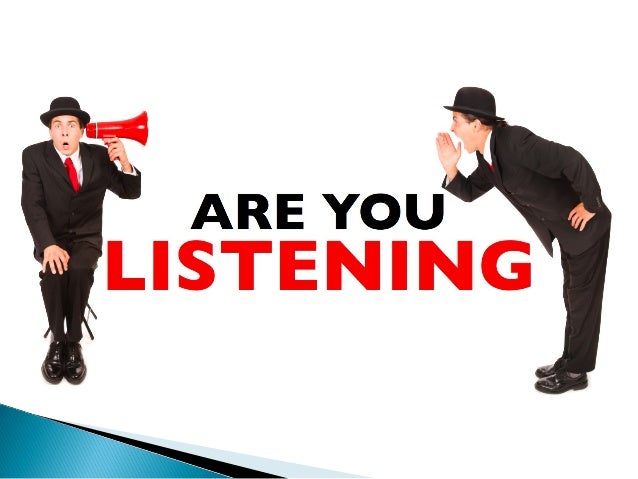
One thing to remember is that listening and hearing are not the same. The hearing is the reception of sound; listening is the attachment of the meaning. So when you have to go for a job interview, you should be giving your undivided attention to the speaker, looking that person in the eye, correct posture, and understanding the information being giving to give positive feedback. All the information that is being provided within this blog can be beneficial in learning a lot about yourself when it comes to listening skills. Effective listening is something that can be learned by educating yourself and learning to eliminate barriers that persist in your mind. After being brought down to reality in thinking that my listening skills are top notch, now I'm back into the education stage in making sure that I have the necessary tools to become more effective when communicating with people. I hope that this information will change your way of thinking as it has changed mind.
Looking forward to providing information that can be powerful in everyday lifestyle, so join me again next week for a new post! Thanks for reading.
Reference
Kline, J.A. (1996). Listening Effectively. Maxwell AirForce Base, AL: Air University Press

No comments:
Post a Comment